
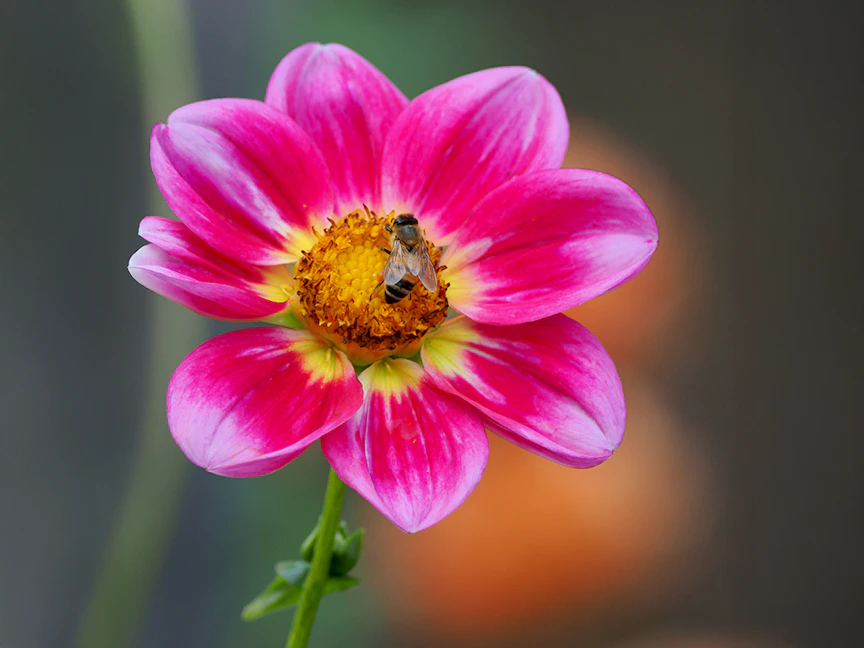
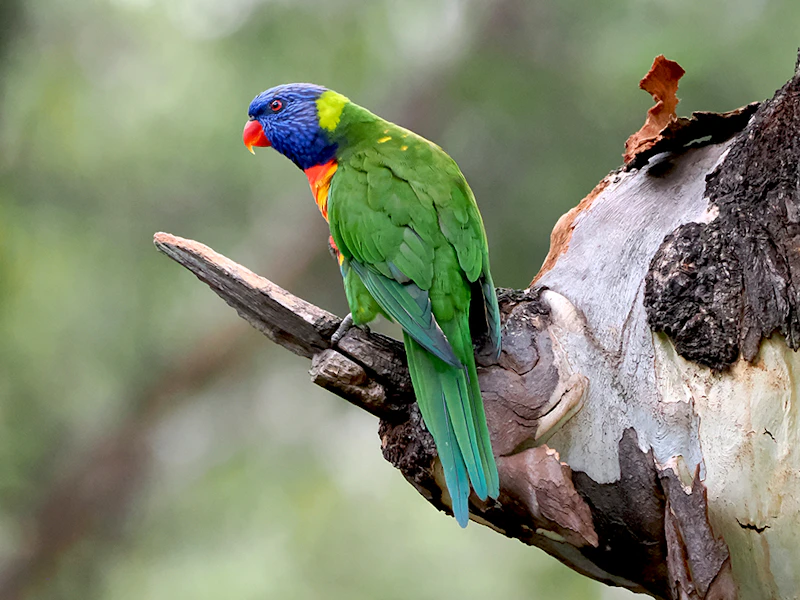
Photo by Kat Millard, Katelizabeth
A Good Day
From 2021-2022 within the confines of an isolated life after abuse, I found solace in the Twenty One Pilots (2021) song Good Day for reasons described in this lyrical line:
I can feel my saturation leaving me slowly
Also in this verse, as my good days were few:
Today's a good day. Never know, never know. When the next one will show, it'll show
If you resonate with the underlying sadness portrayed by this song, you are not alone! A national study of mental health reports that 42.9% of the Australian population aged between 16-85 have experienced a mental disorder such as anxiety or depression at some time in their lifetime (Australian Bureau of Statistics, 2020-2022).
Keyes (2024, p. xiv) explains that that over time the story that we construct to make meaning of our lives and the world around us can begin to crumble.
What if that world around us could actually help improve our wellbeing?
Greenspaces for Improved Wellbeing
Spending time in greenspaces has many documented benefits:
Cognitive improvements and enhanced ability to handle stress (Keltner, 2023, p. 128)
Providing opportunities for restoration, improving mood, and lifting spirits (McCarton et al., 2023)
Positively impacting social relationships through connectedness (Gittins et al., 2023)
Increased happiness, with a feeling that life is worth living (Richardson et al., 2021)
Eliciting a feeling of awe (Büssing, 2025).
Keltner (2023, p. 128) describes that the benefits of awe-inspiring nature are similar to the health benefits of a delicious and nutritious meal that helps us feel nourished, strengthened, empowered and alive.
A Lived Experience of Capturing Nature
Looking back over my journey I now understand that my mental health was being repaired as I chased thunderstorms, photographed the wild seas and meandered through beautiful gardens. It was the cumulative moments I have spent in nature that are central to how I now feel, which is best described by Richardson et al (2021, p. 25):
Tuning in to nature is not about time, not about minutes. It is about moments. Feeling connected to nature and engaging in certain simple activities in nature seem to be more predictive of mental wellbeing than time spent in nature.
Photo Journaling
One practice for improved wellbeing is photo journaling, which involves capturing and sharing the photos you take in nature. In a study of young people in rural Australia by Lee (2025), participants experienced the following positive outcomes after photo journaling:
Moments of stillness and reflection
Suspension of time from life's usual rhythms
A sense of wonder
Existential fulfilment and enthusiasm for life
The practice of photo journaling is also demonstrated through the concept of photo-a-day, which involves capturing one photo each day for a year and sharing photos on social media. The concept is evaluated in a study by Cox & Brewster (2018), with participants reporting:
An overall improved sense of wellbeing
Experiencing positive emotions of pleasure & satisfaction
Improved relationships with friends and family
Building a culture of positive commenting, with one participant stating:
I have several people saying to me that my photos make them feel better when they see them in their day.
Positive commenting culture is where followers interact with your photos online in form of their replies to your posts, as seen here in my own post on Facebook:
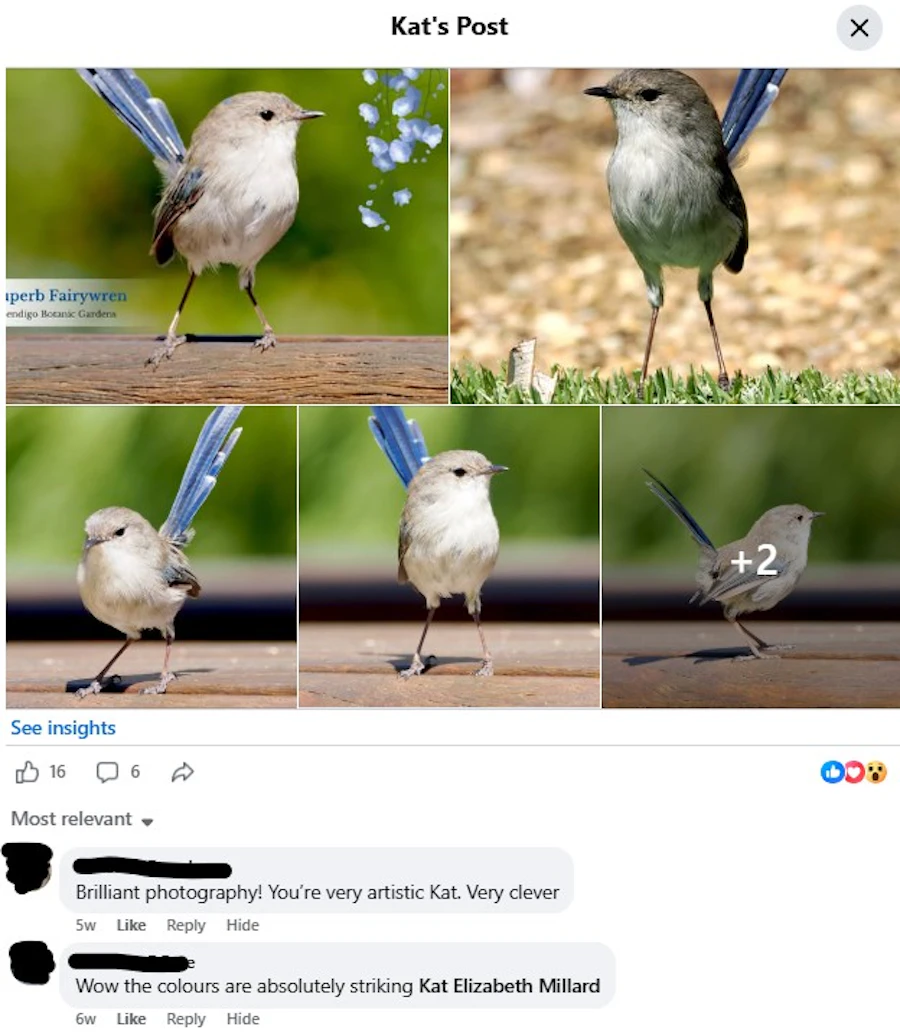
Facebook post by Kat Elizabeth Millard
For a long time, this was my only interaction with friends and family, with the positive feedback proving invaluable for an improved sense of worth, a drive to continue photo journaling, and is a practice that continues to build connectedness with others.
365 Picture Today provides inspiration, prompts, and more ideas about how to apply photo-a-day.
No Greenspaces Near You?
Perhaps you don't have access to greenspaces where you live? You'll be pleased to know that a recent study indicates you can improve wellbeing and increase positive emotions by simply browsing through photos of nature on social media such as Instagram (Stiff & Orchard, 2025). Here is a recommended website to view inspiring nature photos online: Wildlife Photographer of the Year.
Finally, should you seek a perfect greenspace companion, I highly recommend the camera that began my photographic adventures: Olympus Tough TG-7 Waterproof Camera.
However, in absence of a camera, don't forget that a mobile phone will also do!
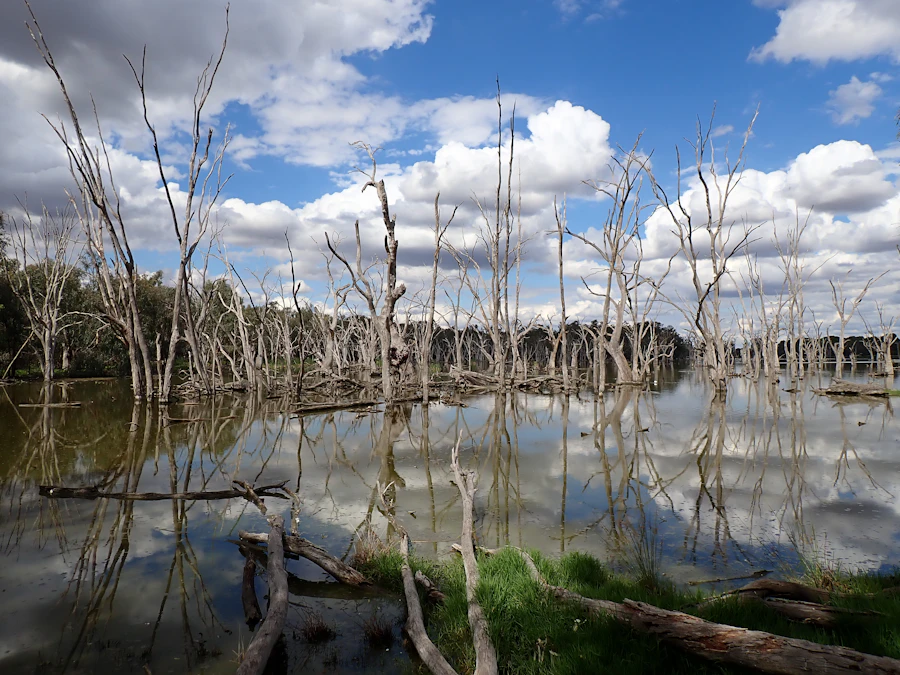
Photo by Kat Millard, Katelizabeth
References
Australian Bureau of Statistics. (2020-2022). National study of mental health and wellbeing. ABS. https://www.abs.gov.au/statistics/health/mental-health/national-study-mental-health-and-wellbeing/latest-release.
Büssing, A., Wilhelm, J., & Rodrigues Recchia, D. (2025). Wondering awe is the mediator of the link between experience of nature and psychological wellbeing: relevance for public health. International Journal of Environmental Research and Public Health, 22(11), 1679. https://www.mdpi.com/1660-4601/22/11/1679
Cox, A., & Brewster, L. (2018). Photo-a-day: A digital photographic practice and its impact on wellbeing. Photographies, 11(1), 113-129. https://www.tandfonline.com/doi/abs/10.1080/17540763.2017.1399288
Gittins, H., Dandy, Dr. N., Wynne-Jones, Dr. S., & Morrison, Prof. V. (2023). “You don’t have to perform for the trees”: The longer-term effects of nature-based interventions on wellbeing. Wellbeing, Space and Society, 5. https://www.sciencedirect.com/science/article/pii/S2666558123000337?via%3Dihub
Keltner, D. (2023). Awe: the transformative power of everyday wonder. Random House.
Keyes, C. (2024). Languishing: How to Feel Alive Again in a World That Wears Us Down. Transworld Publishers, London.
Lee, M. (2025). ‘The little things’: The temporality of young people’s strategies for existential, grounded, and expansive wellbeing in rural Australia. Journal of Applied Youth Studies, 8(1), 63-95. https://link.springer.com/article/10.1007/s43151-024-00150-1
McCartan, C., Davidson, G., Bradley, L., Greer, K., Knifton, L., Mulholland, A., ... & White, C. (2023). ‘Lifts your spirits, lifts your mind’: A co‐produced mixed‐methods exploration of the benefits of green and blue spaces for mental wellbeing. Health Expectations, 26(4), 1679-1691. https://onlinelibrary.wiley.com/doi/epdf/10.1111/hex.13773
Millard, K. (n.d.). Kat Elizabeth Millard. Facebook. https://www.facebook.com/kat.elizabeth.millard/
Millard, K. (2025). Photography by Katelizabeth. Katelizabeth. https://gallery.katelizabeth.com.au/photography/
National History Museum. (2025). Wildlife photographer of the year. https://www.nhm.ac.uk/wpy/gallery
OM Digital Solutions (2026). Tough. https://explore.omsystem.com/us/en/tough
Richardson, M., Passmore, H. A., Lumber, R., Thomas, R., & Hunt, A. (2021). Moments, not minutes: The nature-wellbeing relationship. International journal of wellbeing, 11(1). https://www.internationaljournalofwellbeing.org/index.php/ijow/article/view/1267
Stiff, C., & Orchard, L. J. (2025). Not all bad: A laboratory experiment examining viewing images of nature on Instagram can improve wellbeing and positive emotions. Psychiatry International (Basel), 6(4), 117. https://www.mdpi.com/2673-5318/6/4/117
Twenty One Pilots. (2021). Good day. On Scaled and Icy. Fuelled by Ramen. https://youtu.be/uSnpObUx71Q?si=q8lA-m8xF7UyJZ_T
365 Picture Today (2026). https://365picturetoday.com/
Shortcut Links to Positive Psychology Blog Posts:
Comments Welcomed
Feel free to add comments to this post or send examples of your own photographic journey and experiences of greenspaces for me to share by emailing hello@changethenarrative.com.au.

Written by
Mindfulness for Alleviating Chronic Pain
Photo by Kat Millard, Katelizabeth I begin this blog post emphasising a point made to me at the start of my recovery journey: your pain is real. Here is a snipp
Greenspaces for Australian Primary Schools
Photo by Kat Millard, Katelizabeth Wellbeing of Primary Students in Australia As a teacher you may resonate with Harper et al.'s (2026, p.2) statement about dec
Introduction
Photo by Kat Millard, Katelizabeth What If? What if you had the possibility to overcome aspects of your wellbeing holding you back from a thriving life? What if